

"A sustainable textile industry is achievable, but it requires a complete change in how we handle our fabrics."
- STEAMRS
As has been discussed extensively before, the textile industry is one of the most polluting sectors, but since the signing of the Sustainable Clothing and Textiles Covenant in 2016, more and more brands seem to be focusing on a future-proof textile industry. This is already a great trend, which all of us (as consumers) need to continue! How can you do this yourself at home? Where do you start? You can read all about it in this article!
A brief recap of the damage caused by the current textile industry
Every year, one hundred billion new garments are produced. More than half of all clothing is discarded within one year of production and largely ends up in incinerators or landfills. The textile industry is - after the oil industry - the most polluting sector. The production of clothing and shoes together accounts for approximately 8 percent of global greenhouse gas emissions, of which clothing accounts for 4 to 6.8 percent . For comparison: global aviation is responsible for approximately 3 percent of global greenhouse gas emissions.
Greenhouse gas emissions are not the only problem. The industry has other issues: textile dyeing causes significant water pollution, and extreme drought is also a consequence of the enormous amounts of water used to grow crops such as cotton. In addition, working conditions in low-wage countries are often poor, because workers are exploited and human rights are not safeguarded.
Extend the life of your clothes!
Take care of the garments and textile items you already own!
You can help tackle the polluting fast-fashion industry yourself! Even if you start small, by being less quick to throw away clothing or furniture. How do you extend the life of textiles:
1). Wash and dry less
The washing machine is one of the most energy-consuming appliances in the home. According to Milieu Centraal, the washing machine's energy consumption accounts for approximately 4 percent of total household consumption. The energy used by the appliance has the greatest impact on the climate. Electricity consumption generates greenhouse gases, meaning that washing contributes to climate change. So washing frequently is not very environmentally conscious, but it is also bad for the lifespan of your garments. Textile fibers are quickly weakened and damaged by frequent washing.
It is not only the climate that benefits when you act more responsibly; your clothes will also thank you. It improves the quality of your clothes, helping your items stay beautiful for longer, meaning you need to buy fewer new clothes. We throw away 70 percent of our clothes because the color has faded or because they have shrunk/stretched during washing. This is often the result of incorrect washing habits we have learned. What a waste, because it can easily be done differently!
We often still wash at an unnecessarily high temperature, even though the washing temperature has the greatest impact on energy consumption. The first step toward more sustainable washing is therefore to turn down the temperature.
We also often use an unnecessarily large amount of detergent . These are two aspects you can easily change, and they are highly beneficial for both your clothes and the environment!
Tip: Use sustainable detergents and only wash when the drum is full
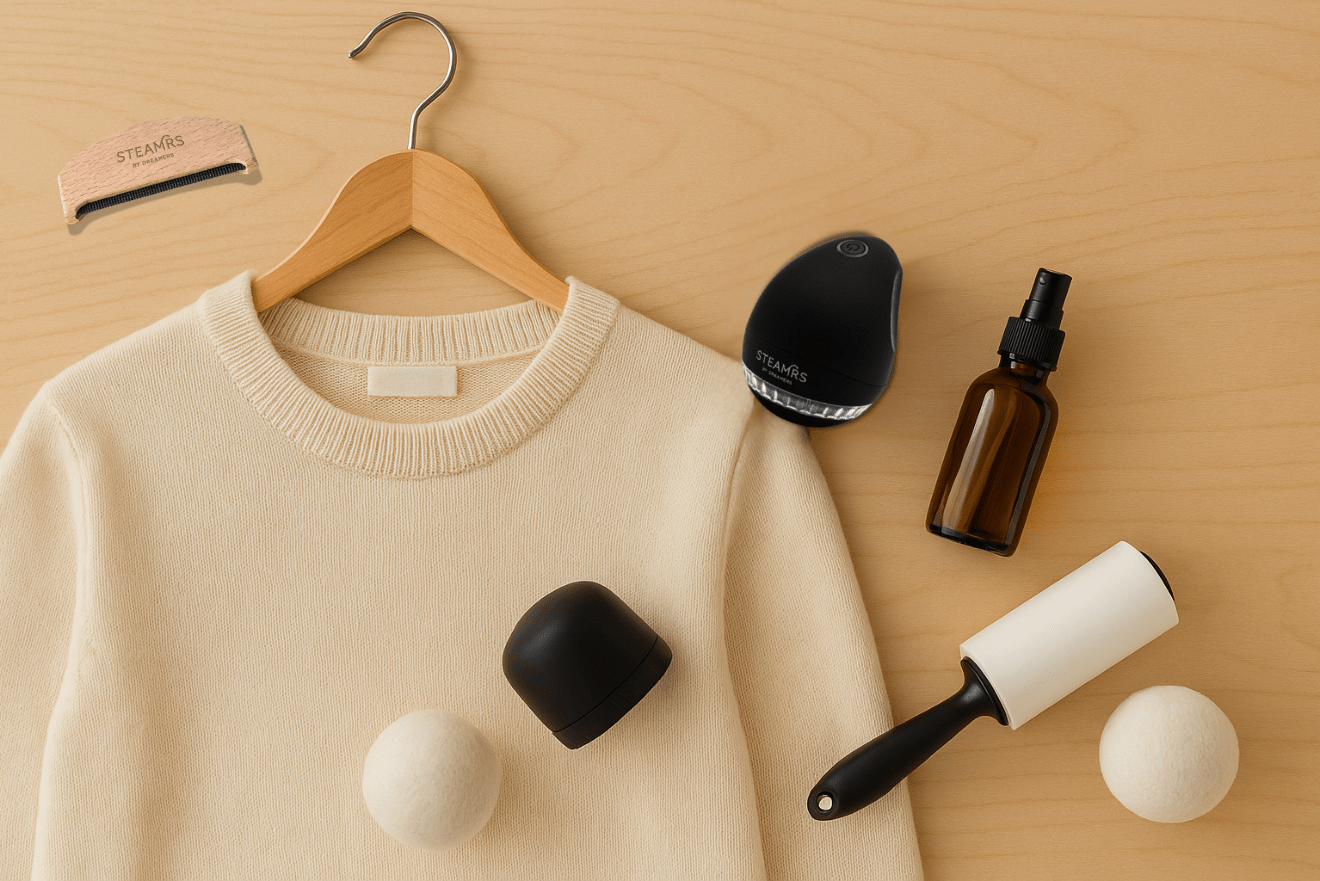
Use sustainable sheep-wool dryer balls while drying. They significantly shorten drying time and make garments extra soft and less wrinkled in the dryer.
2). Avoid ironing
For some textiles, using an iron is truly unavoidable, but be aware that the heat and the pressure you apply to the fabric with your iron 'flatten' and damage its fibers. Each time you iron, the lifespan of your fabric is shortened somewhat.
Tip: try using a steamer or garment steamer. The hot steam easily removes wrinkles from many fabrics without damaging the fibers. Scorch marks are impossible as a result, and the fabric fibers are also 'lifted' and 'filled out' by the hot steam. This makes a garment look fresh and almost new again.
3). Use tools to smooth fabrics
Lint, pills, or (pet) hair can make a garment look extremely unkempt. Make sure you have a few tools at home to remove lint/hair from clothing, such as a lint brush/garment brush or an electric fabric shaver. With such tools, you can easily breathe new life into an old/worn-out garment.
4). Do you still want to get rid of clothing?
Absolutely do not throw your garments away! Instead, donate them to a good cause or take them to vintage stores. Buy clothing of sufficient quality to have a 'second' life and to make someone else very happy with it.
"Our tablecloths, towels, but especially trousers and T-shirts have the greatest environmental and climate impact after food, transport, and housing."
If clothes last longer, fewer new clothes will be produced, purchased, and discarded, the European Commission reasons. The figures show that if we wear a garment from our wardrobe twice as long before throwing it away, this saves 44 percent in greenhouse gas emissions compared with buying/wearing something new instead.
Extending the life of clothing by nine additional months can reduce its carbon, water, and waste footprint by 20 to 30 percent.
In our ideal world, every garment should be provided with information about its expected lifespan, and clothes should have to meet quality standards. At present, EU regulations state that the expected lifespan of a T-shirt is 52 washes. Assuming that a T-shirt is washed once a week, it would therefore be expected to last one year. Ecostandard: How ecodesign can make our textiles circular
Pay attention to the quality of the clothing you buy. The ideal characteristics of a high-quality fabric or garment:
- should be made from a thicker material (otherwise it will deform or tear too quickly);
- should have optimal colorfastness, so the color does not fade too quickly;
- should have a high-quality zipper;
- should have neatly finished seams;
- labels and text should be securely stitched;
- should be easier to reuse, repaired, upgraded, and recycled.
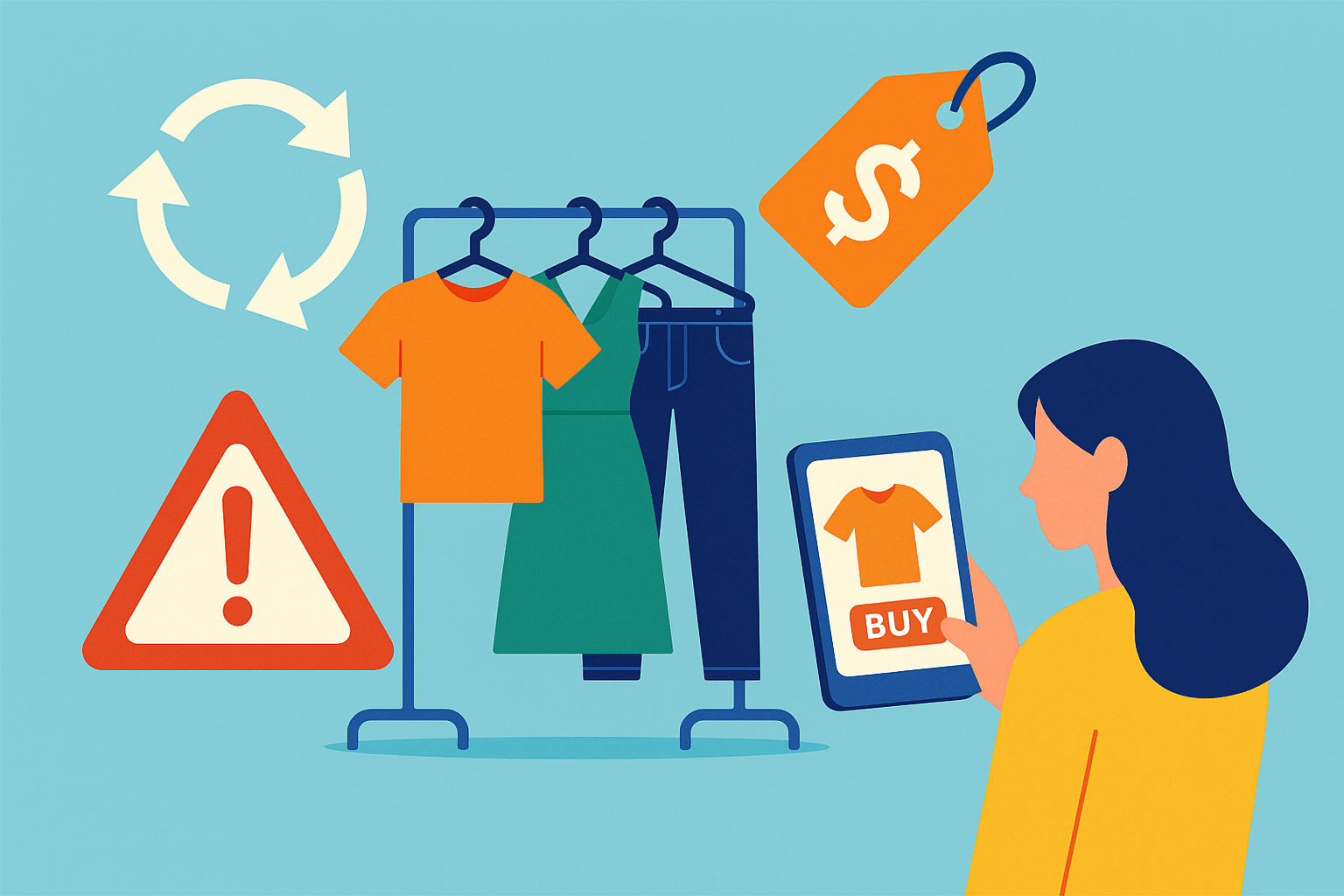
The European Commission hopes this will counter the clothing industry's focus on low costs, rapidly changing fashion trends, and a continuous stream of new clothes. This would spell the end for popular fast-fashion chains such as PRIMARK and SHEIN, etc., which place more than six hundred new items on their websites every day at extremely low prices.


Leave a comment
All comments are moderated before being published.
This site is protected by hCaptcha and the hCaptcha Privacy Policy and Terms of Service apply.